Simple 2100 Calorie Meal Plan for Busy Professionals
Simple 2100 Calorie Meal Plan for Busy Professionals
You know the drill. You want to lose fat or maintain your weight, but between meetings, deadlines, and commuting, meal planning feels like another full-time job. Sound familiar?
A well-structured 2100 calorie meal plan hits the sweet spot for many busy professionals. It's enough fuel to power through demanding days while creating the calorie deficit needed for fat loss—or maintaining your current weight if that's your goal.
The real challenge isn't knowing you need to eat 2100 calories. It's figuring out what those calories should look like when you're grabbing lunch between calls and prepping dinner at 9 PM.
This guide breaks down exactly how to build a sustainable 2100-calorie day that works with your schedule, not against it.
Why 2100 Calories Works for Many Professionals
For most moderately active adults, 2100 calories creates a manageable calorie deficit without the energy crashes that come with extreme restriction.
Here's who typically thrives on this target:
- Women who are moderately active and want steady fat loss
- Men with sedentary jobs looking to lose weight gradually
- Anyone maintaining weight after previous fat loss
- People who want to track macros without obsessing over every gram
The CDC recommends that sustainable weight loss happens at 1-2 pounds per week, which usually requires a 500-750 calorie daily deficit from your maintenance needs.
Building Your 2100 Calorie Framework
Macro Breakdown That Actually Works
Forget complicated ratios. Here's a practical split that keeps you satisfied and energized:
High-Protein Option:
- Protein: 140-160g (30%)
- Carbs: 210-240g (40%)
- Fat: 70-80g (30%)
Balanced Option:
- Protein: 120-140g (25%)
- Carbs: 240-270g (45%)
- Fat: 75-85g (30%)
The high-protein version works well if you're strength training or find protein keeps you fuller longer. The balanced approach gives you more flexibility with carbs for energy and brain function.
Meal Timing for Busy Schedules
You don't need to eat every 2 hours. Here are three timing approaches that work:
Three Square Meals:
- Breakfast: 500-600 calories
- Lunch: 700-800 calories
- Dinner: 700-800 calories
- Snack: 200-300 calories
Intermittent Fasting Friendly:
- Skip breakfast
- Lunch: 800-900 calories
- Dinner: 900-1000 calories
- Evening snack: 300-400 calories
Grazer Style:
- 5-6 smaller meals of 350-420 calories each
Sample 2100 Calorie Meal Plan Example
Here's what a high protein 2100 calorie day looks like in practice:
Breakfast (520 calories)
- 3 whole eggs + 2 egg whites scrambled
- 1 slice whole grain toast
- 1/2 medium avocado
- 1 cup coffee with 2 tbsp milk
Macros: 28g protein, 25g carbs, 32g fat
Mid-Morning Snack (180 calories)
- 1 medium apple
- 1 tbsp almond butter
Macros: 4g protein, 25g carbs, 8g fat
Lunch (620 calories)
- 4 oz grilled chicken breast
- 1.5 cups quinoa salad with vegetables
- 2 tbsp olive oil vinaigrette
- Mixed greens
Macros: 38g protein, 45g carbs, 22g fat
Afternoon Snack (200 calories)
- 1 cup Greek yogurt (plain, 2%)
- 1/4 cup berries
Macros: 20g protein, 15g carbs, 6g fat
Dinner (580 calories)
- 4 oz salmon fillet
- 1 cup roasted sweet potato
- 1 cup steamed broccoli
- 1 tsp olive oil
Macros: 32g protein, 35g carbs, 18g fat
Daily Totals: 2,100 calories, 147g protein, 170g carbs, 86g fat
Quick Meal Prep Strategies
Sunday Power Hour
Spend 60-90 minutes on Sunday setting yourself up for success:
- Protein prep: Grill 2-3 lbs of chicken, bake salmon portions, hard-boil a dozen eggs
- Carb prep: Cook quinoa, brown rice, or sweet potatoes in bulk
- Veggie prep: Wash and chop vegetables, roast a sheet pan of mixed veggies
- Snack portions: Divide nuts, fruits, and yogurt into grab-and-go containers
Emergency Desk Meals
Keep these sample meal ideas at your office:
- Protein powder + banana + instant oats (mix with hot water)
- Canned salmon + crackers + pre-cut vegetables
- Greek yogurt + granola + nuts
- Rotisserie chicken (store-bought) + microwaveable rice + frozen vegetables
Making 2100 Calories Work for Weight Loss
Using 2100 calories for weight loss requires precision. A difference of 200-300 calories daily can be the difference between losing fat and maintaining weight.
This is where many people struggle. Eyeballing portions or using generic food entries in apps often leads to underestimating intake by 20-30%.
Research from the New England Journal of Medicine shows that people consistently underestimate their calorie intake, even when they think they're being accurate.
Common Mistakes That Sabotage Your 2100 Calorie Plan
Liquid Calories Add Up Fast
That large latte? 300 calories. The afternoon smoothie? 400 calories. Two glasses of wine after work? 250 calories.
Sudenly your 2100-calorie day becomes 2400+ calories, and you wonder why the scale isn't moving.
Fix: Track all beverages or stick to water, black coffee, and tea most of the time.
Weekend Warrior Syndrome
You nail your 2100 calories Monday through Friday, then blow it out Saturday and Sunday. Those two days can easily undo your weekly deficit.
Fix: Plan for weekend flexibility by banking 100-200 calories during the week, or practice portion awareness even when you're not strictly tracking.
Ignoring Cooking Oils and Condiments
A tablespoon of olive oil is 120 calories. That "small amount" of salad dressing? Probably 150 calories. These additions are healthy but calorie-dense.
Fix: Measure fats and sauces, at least until you can eyeball portions accurately.
All-or-Nothing Thinking
One over-calorie day doesn't ruin everything. Neither does one under-calorie day speed up your progress significantly.
Fix: Focus on weekly averages, not daily perfection.
Adjusting Your Plan Based on Results
After 2-3 Weeks, Evaluate
If you're losing 1-2 pounds per week: You're on track. Keep going.
If you're losing more than 2 pounds per week: You might be in too large a deficit. Consider adding 100-200 calories, focusing on carbs around workouts.
If you're not losing weight: Double-check your tracking accuracy first. If that's solid, reduce calories by 100-150 per day.
If you're losing energy or strength: Add 50-100 calories from carbs, especially around your workouts.
When Life Gets Crazy
Some weeks are harder than others. When you're traveling, dealing with deadlines, or managing family obligations, perfection isn't realistic.
Here's your simplified approach:
- Prioritize protein at every meal
- Fill half your plate with vegetables when possible
- Stick to single-ingredient foods when you can
- Don't stress about hitting exactly 2100 calories every day
Tools That Make Tracking Easier
Manual calorie logging works, but it's time-consuming and often inaccurate. Many busy professionals start strong but burn out within a few weeks.
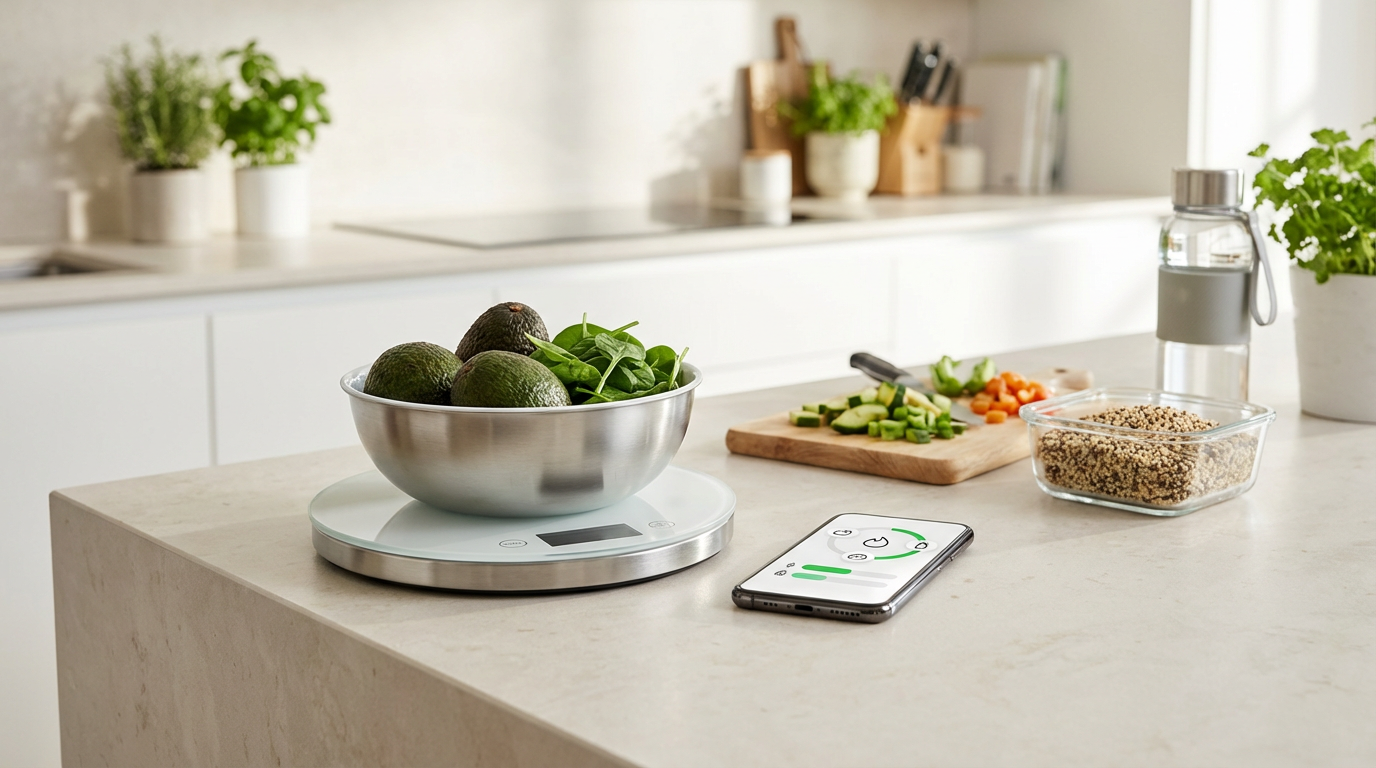
This is where smart technology can help. The Qalzy app and kitchen scale uses AI to automatically identify and track your food as you prepare meals. No more searching databases or measuring every ingredient separately.
For recipes and meal ideas that fit your calorie goals, check out Qalzy's cookbook for professionally-designed meals with accurate macro calculations.
Sample Weekly Meal Rotation
To avoid decision fatigue, rotate between these 2100 calorie meal plan example days:
Day A: Mediterranean-Inspired
- Breakfast: Greek yogurt parfait with nuts and berries
- Lunch: Grilled chicken salad with olive oil dressing
- Dinner: Baked cod with quinoa and roasted vegetables
Day B: Asian-Fusion
- Breakfast: Vegetable omelet with whole grain toast
- Lunch: Turkey and avocado wrap with side salad
- Dinner: Stir-fried tofu with brown rice and vegetables
Day C: Classic American
- Breakfast: Oatmeal with protein powder and fruit
- Lunch: Lean beef with sweet potato and green beans
- Dinner: Grilled salmon with wild rice and asparagus
Having three go-to day templates eliminates the "what should I eat?" decision every morning.
Frequently Asked Questions
Is 2100 calories enough for active people?
It depends on your activity level and goals. If you're strength training 4-5 times per week or doing intense cardio, you might need 2300-2500 calories. Use a reliable calculator to estimate your needs, then adjust based on results.
Can I eat the same foods every day?
Yes, if you enjoy them. Many successful people eat similar meals most days. Just ensure you're getting variety in your vegetables and don't develop nutrient deficiencies over time.
What if I'm still hungry on 2100 calories?
Increase your protein and fiber intake first. Add more non-starchy vegetables to your meals. If you're still struggling after 2 weeks, you might need more calories.
Should I eat back exercise calories?
Most fitness trackers overestimate calorie burn by 15-30%. If you're doing intense workouts, eat back about half of your estimated exercise calories and monitor your energy levels and results.
How long should I follow a 2100 calorie plan?
For fat loss, most people can follow this for 8-16 weeks before needing a diet break. For maintenance, it can work indefinitely if it matches your needs.
What about cheat meals or refeed days?
They're not necessary but can help psychologically. If you include them, plan for them by reducing calories slightly on other days, or accept that your weekly average will be higher.
Making It Sustainable Long-Term
The best 2100 calorie meal plan is the one you can stick with consistently. Perfect adherence for 4 weeks beats sporadic perfection over 12 weeks.
Start with the framework provided here, but adapt it to your preferences, schedule, and lifestyle. Some people thrive on routine; others need variety. Some prefer larger meals; others like frequent snacking.
The key is finding your version of 2100 calories that feels sustainable, not restrictive.
For more nutrition guidance and meal planning tips, explore the Qalzy blog for evidence-based advice that fits real life.
Remember: consistency beats perfection. Your 2100-calorie plan should feel like a lifestyle upgrade, not a temporary punishment. When it feels that way, you'll know you've found an approach that works for the long haul.